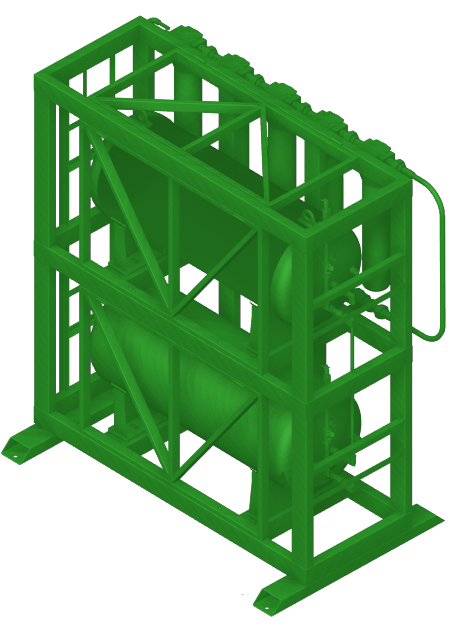
Gaseous hydrogen generator from chemical reactions for industrial use, operated in environments controlled by qualified personnel. Designed and built in the factory, transported by modules and assembled on site.
Loading 3D model...
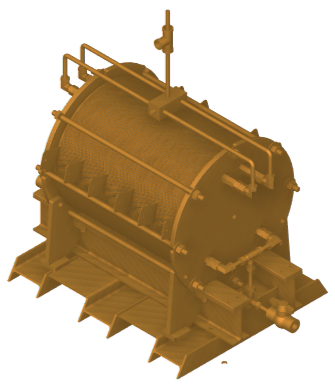
Electrolysis Cell - Technological Core
The electrolysis cell is the central component of our hydrogen generation technology. Its patented electrode design (anode and cathode) represents a technological milestone that optimizes the energy efficiency of the process. Through strategic combination of electrode geometry, surface properties, high-performance materials, flow control and precise thermal management, we maximize hydrogen ion production with the highest market operational efficiency.
Electrical Specifications
Supply Voltage
24 VDC
Energy Consumption
60 – 5000 W
Current Consumption
10 – 400 A
Operating Temperature
-40 °C to 80 °C
Dimensions
0.7 × 0.8 × 0.55 m
Operational Specifications
Output Pressure
30 PSI
H₂ Purity
80% – 90%
Heat Dissipation
40 °C/h
Water Consumption
18 L
Sensors
Temperature, Pressure
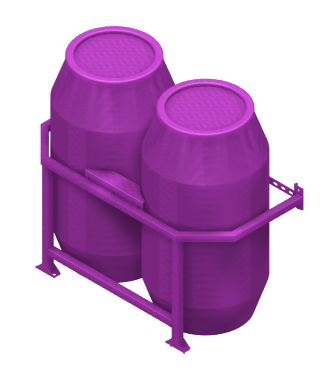
Fluid Storage System - Integrated Thermal Control
The process isotank is a double-structure container (plastic core with tubular metal reinforcement) designed to ensure maximum durability and performance. It stores and supplies operational fluids in a controlled manner (distilled water or KOH electrolytic solution). Its integrated heat exchanger system maintains optimal thermal conditions throughout operation, ensuring sustained efficiency and extended system lifespan.
Tank Characteristics
Capacity
1000 liters (275 gallons)
Dimensions
1.20 × 1.00 × 1.16 m
Weight Empty
53.4 kg
Weight Loaded
1054 kg
Properties and Control
Material
Plastic container with tubular metal structure
Fluid Content
Water or electrolyte (potassium hydroxide, KOH)
Sensors
Temperature and level
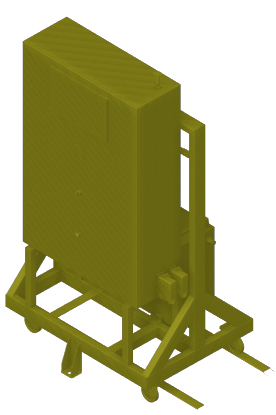
Power and Control Rack - Industrial Automation
The power and control rack is the intelligent heart of the system, an industrial automation cabinet that orchestrates every aspect of the hydrogen generator. It integrates advanced PLC control modules, precision power management, real-time monitoring systems, overload protection, and automatic fault diagnosis. It guarantees safe, reliable and efficient operation under any industrial load condition.
General Specifications
Power Supply
220 V — 3 Phase · Neutral · Ground
Dimensions
0.73 × 1.0 × 1.6 m
Weight
90 kg
Center of Mass
0.7 m height
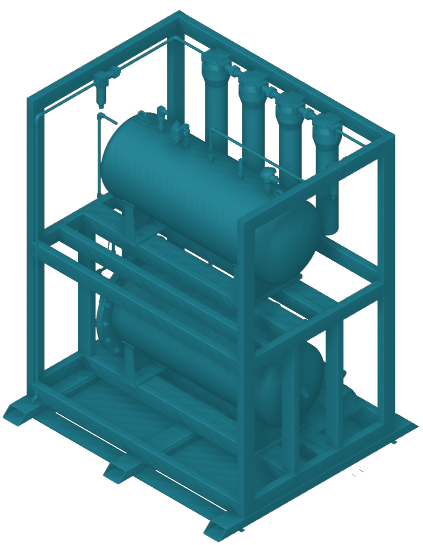
Separation and Cooling System - Hydrogen Purification
The separator tank receives the gas mixture produced in the electrolysis and implements a three-stage gas-liquid separation process: refrigeration condensation, centrifugal spray and gravity decantation. This system guarantees hydrogen purity greater than 99.8%, eliminating residual water vapor and ensuring that only pure hydrogen gas continues to the filtration and storage stage.
General Characteristics
Capacity
125 litros / 33 gal
Heat Exchanger Weight
130 kg sin carga · 248 kg con carga
Separation Tank Weight
82 kg sin carga · 123 kg con carga
Dimensions
0.6 × 0.6 × 1.2 m
Safety and Standards
Sensors and Safety
Pressure relief valve · Hydrogen safety valve · Control fill solenoid valve
Normative Standard
NTC-ISO 22734
Additional Standards
ISO 12100 / ASME Section VII–VIII
Hydrogen Storage System - Dual Pressurization
Our storage system integrates two stationary pressure vessels designed under international ISO 9809 standards for maximum safety. Without the need for additional compression, the vessels maintain pure hydrogen at controlled pressure, allowing continuous and reliable supply to industrial application devices. Ideal for applications requiring energy autonomy and reduced dependence on fossil fuels.
Storage Specifications
Capacity
125 litros / 33 gal
Weight
82 kg no load
Sensors and Safety
Temperature and pressure · Pressure relief valve · Hydrogen safety valve · Check valve · Flame arrestor